Clean TeQ Water and Enpure Join Forces to Bring Moving Bed Ion Exchange-Based Nutrient Removal to UK Water Utilities
7 October 2026
Highlights
Bringing Nutrient Removal to the UK
Clean TeQ Water and Enpure, part of the SKion Water group, are partnering to bring PHOSPHIX® phosphorus removal and BIONEX® nitrate removal to the UK municipal water market.
Proven MBIX Technology
Both technologies are built on Clean TeQ Water’s proprietary Moving Bed Ion Exchange (MBIX) platform. They are designed to meet very low nutrient limits reliably while turning waste streams into recoverable or benign products, at lower whole-life cost.
Pathway to UK Utility Adoption
The collaboration pairs proven technology with Enpure’s long track record delivering for UK water utilities. The aim is to give water companies a straightforward route to adopting these technologies.
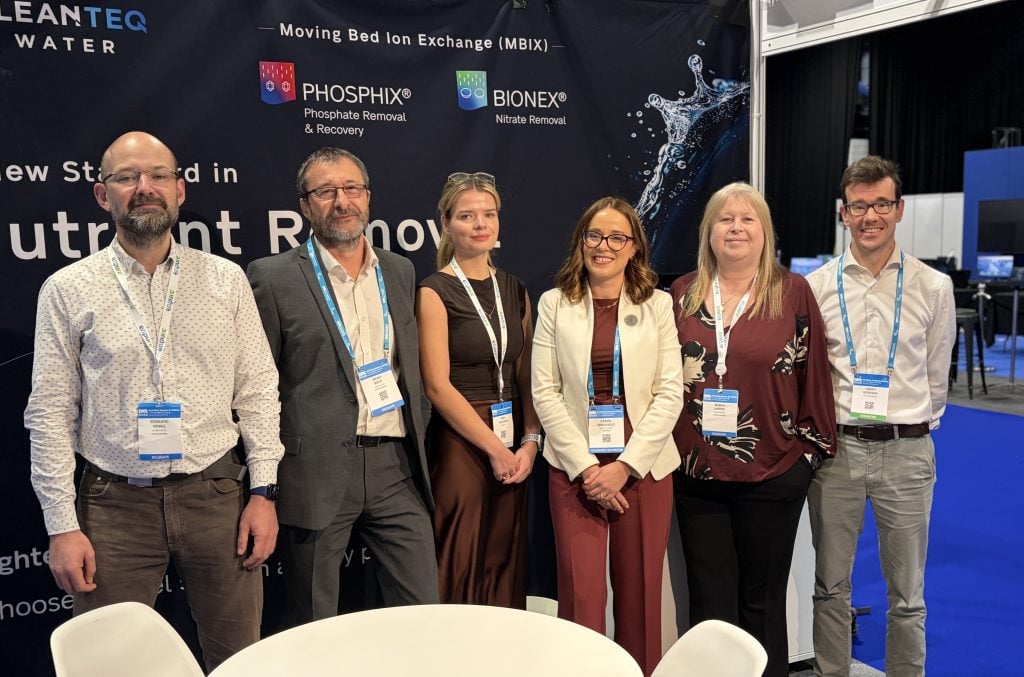
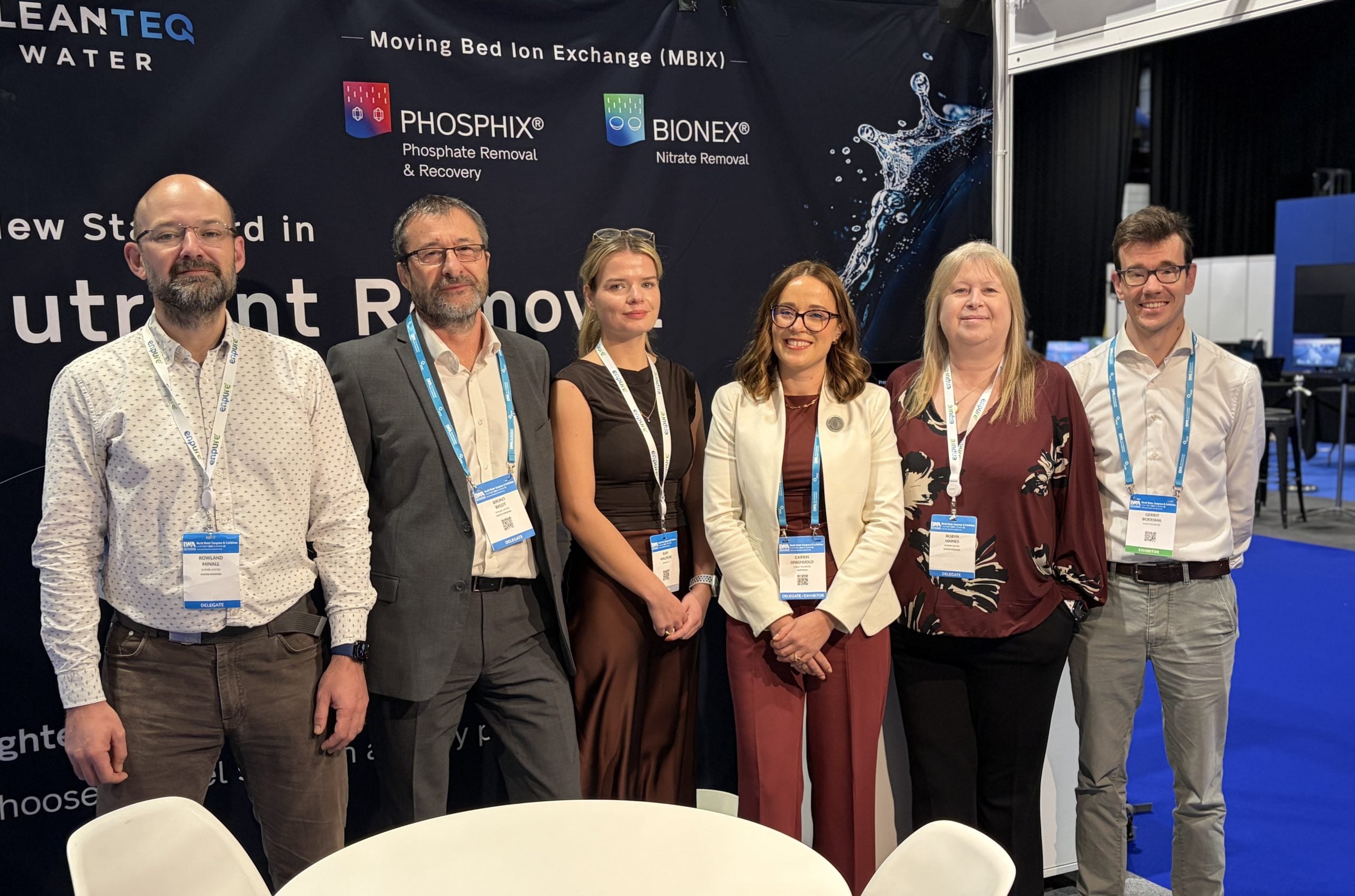
From left to right: Rowland Minnall, Enpure Technical Solutions Specialist; Bruno Bigot, Enpure Technical Director; Ruby Waldron, Enpure Graduate Technical Solutions Specialist; Carien Spagnuolo, Clean TeQ Water Chief Commercial Officer; Robyn Haines, Enpure Head of Business Development; Gerrit Boersma, Clean TeQ Water Sales Manager – Europe
Clean TeQ Water and Enpure are pleased to announce a collaboration agreement to bring Clean TeQ Water’s Moving Bed Ion Exchange-based nutrient removal technologies to water utilities across the United Kingdom. The collaboration agreement has an initial term of 24 months, during which time Enpure is Clean TeQ Water’s exclusive delivery partner for PHOSPHIX® and BIONEX® for specified UK water utilities.
Tightening Limits, Rising Costs
The UK water sector is facing increasingly demanding nutrient reduction targets. In the UK, legally binding targets require phosphorus loadings from treated wastewater to fall by 80% by 2038, against a 2020 baseline, with an interim target of 55% by 2030. The current investment period (AMP8, 2025–2030) includes phosphorus reduction schemes at more than 800 treatment works, and larger works in designated sensitive catchments must meet a total phosphorus limit of 0.25 mg/L by April 2030. Nitrate remains a persistent challenge for drinking water sources, with elevated concentrations requiring utilities to manage or treat affected supplies to maintain compliance with drinking water standards.
As permits tighten, conventional treatment approaches come under strain. At these limits, chemical dosing is pushed to its operational edge, reaching very low phosphorus concentrations reliably means higher metal salt doses, additional filtration and more sludge, with less margin against permitted discharge levels. Metal-dosed sludge also locks phosphorus into a form that is difficult to recover. This is increasing the focus on technologies that can achieve tighter limits at a lower whole-life cost.
A Different Approach: Moving Bed Ion Exchange
PHOSPHIX® and BIONEX® are both built on Clean TeQ Water’s Moving Bed Ion Exchange (MBIX) platform. MBIX continuously circulates ion exchange resin between adsorption and regeneration, enabling more efficient resin utilisation and selective capture of the target nutrient. Because adsorption and regeneration are decoupled, the regeneration stage can be designed around what happens to the captured contaminant, not just around regenerating the resin. This extends the range of ion exchange chemistries that can be used in practice and allows treatment to be coupled directly with by-product recovery. In PHOSPHIX®, captured phosphorus becomes hydroxyapatite. In BIONEX®, captured nitrate is converted to nitrogen gas so the brine can be reused. In both cases, what would otherwise be a waste stream becomes part of a circular process.
PHOSPHIX® removes phosphate to very low levels and recovers it as hydroxyapatite, a compact, solid phosphorus product with potential for reuse. This replaces the large sludge volumes produced by conventional chemical dosing. The process operates at very high water recovery (typically above 99%), with a small site footprint and typically 50% lower operating costs than chemical dosing with tertiary filtration at equivalent limits. At Clean TeQ Water’s first PHOSPHIX® plant in Europe, an industrial installation which completed performance testing in 2026, treated water consistently achieved phosphorus concentrations below 0.1 mg/L.
Phosphorus is a finite resource, and the UK relies on imported phosphate. At the same time, the rules for returning sewage sludge to land are under review. PHOSPHIX® addresses both pressures in a single step: it delivers compliance and produces a concentrated, recoverable phosphorus product rather than a metal-bound sludge. For utilities, this turns a compliance cost into a contribution to circular resource targets.
Conventional ion exchange removes nitrate from drinking water effectively, but each regeneration produces a concentrated salt brine that must be disposed of. For many inland treatment sites this brine is a significant operating cost and an environmental liability in its own right. BIONEX® addresses the problem at its source. It combines MBIX with Clean TeQ Water’s BIOCLENS® encapsulated bacteria, which convert the nitrate captured in the regeneration brine into harmless nitrogen gas. The brine is then reused rather than discharged, significantly reducing waste brine volumes and salt consumption. The biological treatment loop is fully isolated from the potable water stream. BIONEX® is already proven at scale, including a 12 megalitre-per-day plant removing nitrate from wastewater prior to discharge in China.
Joining Forces for the UK Market
For water utilities, adopting a new technology depends as much on delivery confidence as on process performance. Enpure has decades of experience delivering water and wastewater projects for UK water companies across the full project lifecycle, from feasibility and early contractor involvement through design, construction, commissioning and operation. It brings a deep understanding of UK regulatory requirements and utility procurement, backed by the wider SKion Water group.
By combining Clean TeQ Water’s technology and process expertise with Enpure’s UK delivery capability and utility relationships, the collaboration offers water companies a single, trusted route to deploying PHOSPHIX® and BIONEX® at their sites. Clean TeQ Water will provide process design, technology supply and performance support, while Enpure will lead project delivery, integration and customer engagement for UK water companies.
“PHOSPHIX® meets those phosphorus limits and turns the phosphorus into a product rather than a sludge, while BIONEX® removes nitrate from drinking water without the brine burden of conventional ion exchange. For a new technology to be adopted here, a strong local delivery partner is essential. Enpure knows the UK water sector and its customers exceptionally well, which makes them the natural partner to bring these technologies to the utilities that need them.”
“PHOSPHIX® and BIONEX® meet those limits and turn waste streams into recoverable resources. By pairing Clean TeQ Water’s proven technology with Enpure’s UK delivery track record, we’re giving water companies a trusted, low-risk route to adopting it at their sites. We’re delighted to be working closely with the Clean TeQ Water team and look forward to building a long-term relationship that combines our engineering and technology expertise for the benefit of UK water customers.”
Keep up to date with the latest Clean TeQ Water announcements.